
Last updated: 2025-08-04
Overview
This article describes my recommended settings for Intrinsic Reaction Coordinate (IRC) calculations in Gaussian 16, which I use as my personal “first choice” approach. IRC calculations are essential for verifying transition states by following the reaction path from the transition state to reactants and products.
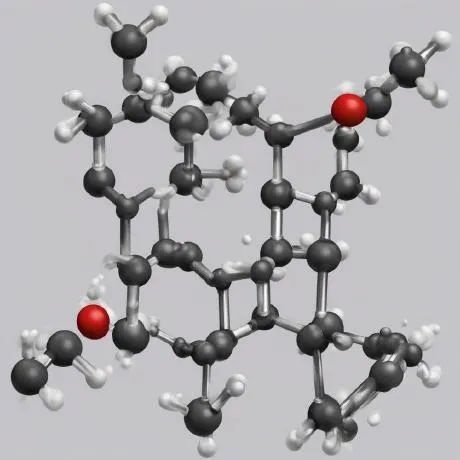
The example system used is a cycloaddition reaction transition state, but the settings can be applied to various reaction types.
My Preferred Gaussian 16 IRC Settings
%mem=4GB
%nprocshared=4
#p irc=(calcfc,maxpoints=9999,recalc=10,lqa) hf/3-21g

Title Card Required

0 1
 C                 -1.25830200   -0.01255100    0.00000600
 C                 -0.98215300   -0.69535400    1.19814900
 C                  0.98216500   -0.69536100    1.19813500
 C                  1.25830200   -0.01255100   -0.00000600
 C                  0.98215300   -0.69535600   -1.19814800
 C                 -0.98216500   -0.69536300   -1.19813400
 H                  1.17613600   -0.18283500    2.12419500
 H                 -1.17610800   -0.18281900    2.12420700
 H                 -1.19261300   -1.75054200    1.23731800
 H                  1.17610800   -0.18282300   -2.12420600
 H                  1.19261300   -1.75054400   -1.23731500
 H                 -1.17613600   -0.18283900   -2.12419400
 H                 -1.19262000   -1.75055300   -1.23729000
 H                  1.19262000   -1.75055000    1.23729300
 C                  0.85391800    1.40131500   -0.00000100
 H                  1.16148000    1.93924200   -0.88484600
 C                 -0.85391800    1.40131500   -0.00000200
 H                 -1.16147900    1.93923100   -0.88485500
 H                 -1.16148000    1.93924300    0.88484300
H 1.16147900 1.93923200 0.88485100Detailed Explanation of IRC Parameters
IRC-Specific Keywords
irc: Initiates an IRC calculationcalcfc: Calculates force constants at the initial point (transition state) before starting the IRCmaxpoints=9999: Sets a high maximum number of points to ensure complete IRC pathsrecalc=10: Recalculates the Hessian every 10 points to maintain accuracylqa: Uses the Local Quadratic Approximation algorithm, which is generally more robust than the default
Why These Settings Work Well
The calcfc Option
Starting with an accurate Hessian is crucial for IRC calculations. The calcfc option ensures that force constants are calculated at the transition state, providing a reliable starting point for following the reaction path.
High maxpoints Value
IRC calculations can sometimes require many points to reach minima, especially for complex reactions or flat potential energy surfaces. Setting maxpoints=9999 prevents premature termination, though most calculations will complete with far fewer points.
Regular Hessian Recalculation
The recalc=10 option strikes a balance between accuracy and efficiency. Recalculating the Hessian:
- Prevents accumulation of numerical errors
- Helps navigate complex regions of the potential energy surface
- Improves convergence in difficult cases
LQA Algorithm
The Local Quadratic Approximation algorithm often provides more stable IRC paths than the default Gonzalez-Schlegel method, especially for reactions with complex potential energy surfaces.
Analysis of IRC Results
After performing an IRC calculation, I typically analyze:
- Connectivity of endpoints: Do they match expected reactants and products?
- Energy profile: Is there a smooth descent from the transition state to the minima?
- Structural changes: How do key bonds and angles change along the reaction path?
Conclusion
The IRC settings outlined in this post provide a robust starting point for most reaction path calculations. The combination of calcfc, regular Hessian recalculation, and the LQA algorithm offers a good balance between reliability and computational efficiency.
References
- Fukui, K. “The path of chemical reactions - the IRC approach.” Acc. Chem. Res. 1981, 14, 363-368.
- Gonzalez, C.; Schlegel, H. B. “Reaction path following in mass-weighted internal coordinates.” J. Phys. Chem. 1990, 94, 5523-5527.
- Hratchian, H. P.; Schlegel, H. B. “Finding minima, transition states, and following reaction pathways on ab initio potential energy surfaces.” Theory and Applications of Computational Chemistry: The First 40 Years, 2005, 195-249.
- Gaussian 16 User’s Reference: https://gaussian.com/irc/
- Ess, D. H. et al. “How Do Hessians and Step Sizes Impact the Efficiency and Accuracy of IRC Calculations?” J. Phys. Chem. A 2021, 125, 1266-1276.